Open this in the pixkoz appGet the pixkoz app on Google PlayUse the pixkoz app
OpenGetOpen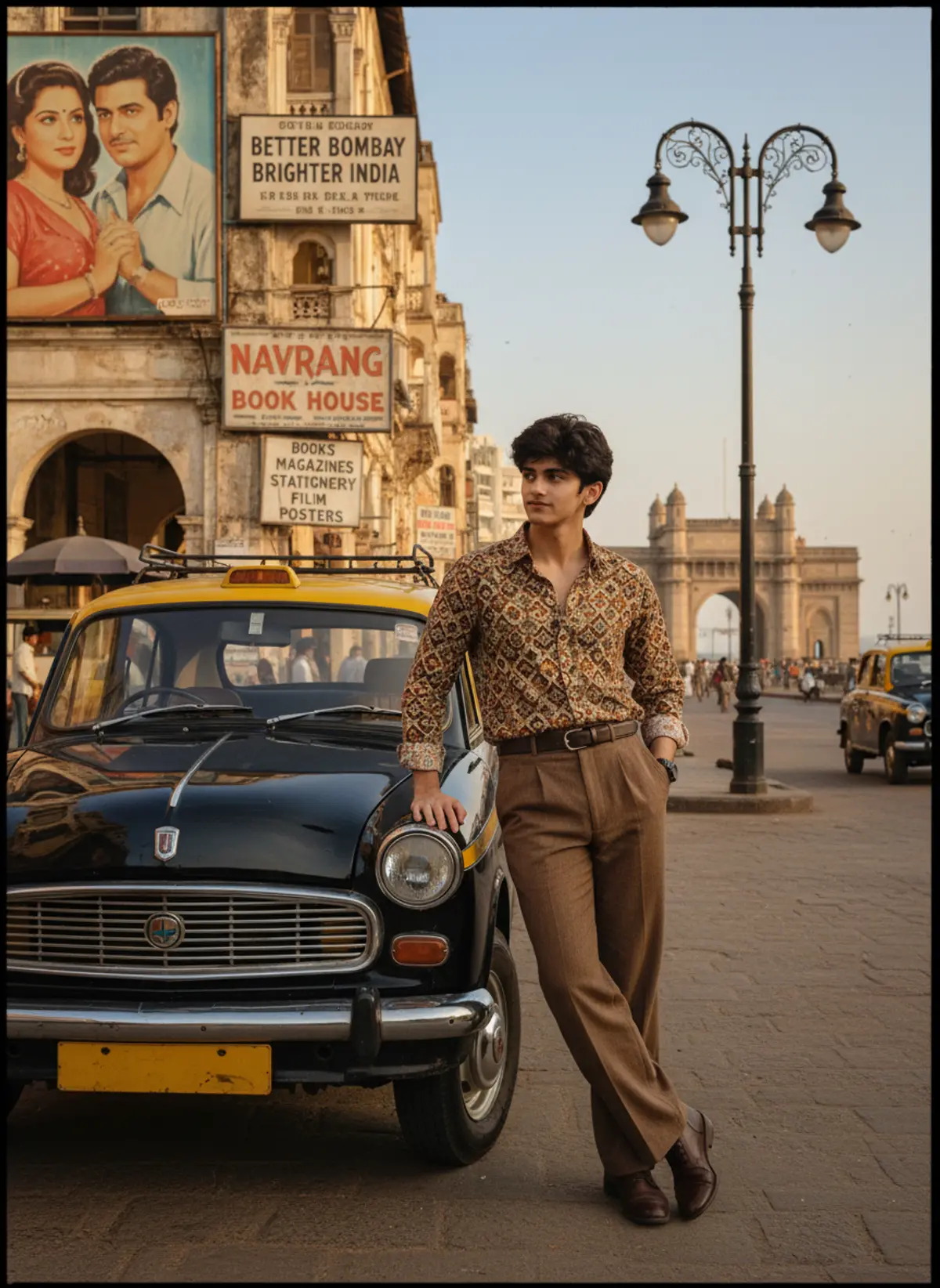
Vintage Bombay Time Capsule
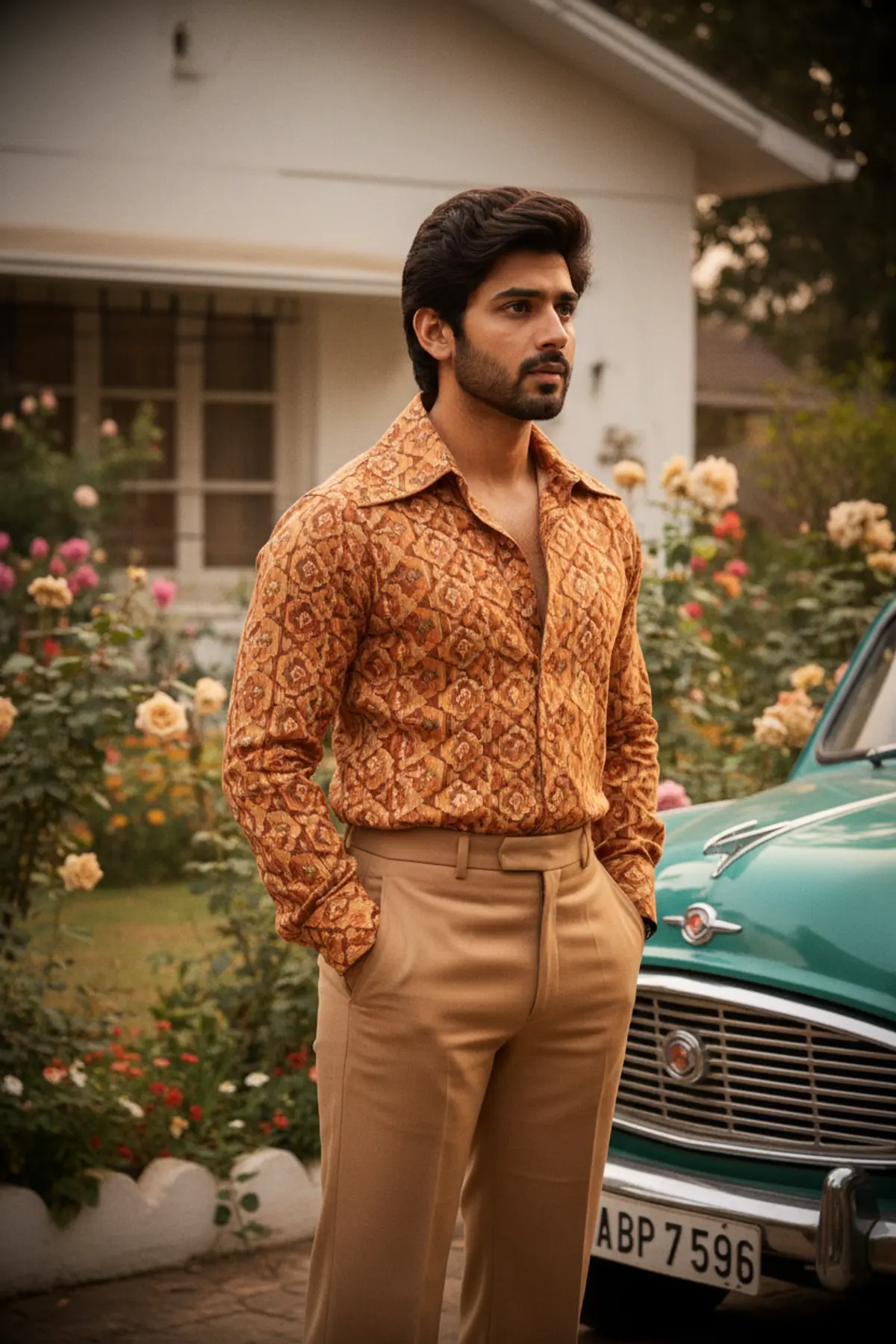
A cinematic 1960s–70s Bollywood-inspired portrait imagining the same person in old Bombay, styled in authentic retro fashion beside a classic black-and-yellow taxi with the Gateway of India glowing in the golden-hour background.
Copy this, then paste it with your photo in Gemini or ChatGPT
ChatGPT opens with your prompt filled in. In Gemini, paste it. Add your photo there and send.ChatGPT opens with your prompt filled in. In Gemini, long-press the box, tap Paste. Add your photo.
Prompt
Needs 1 photo
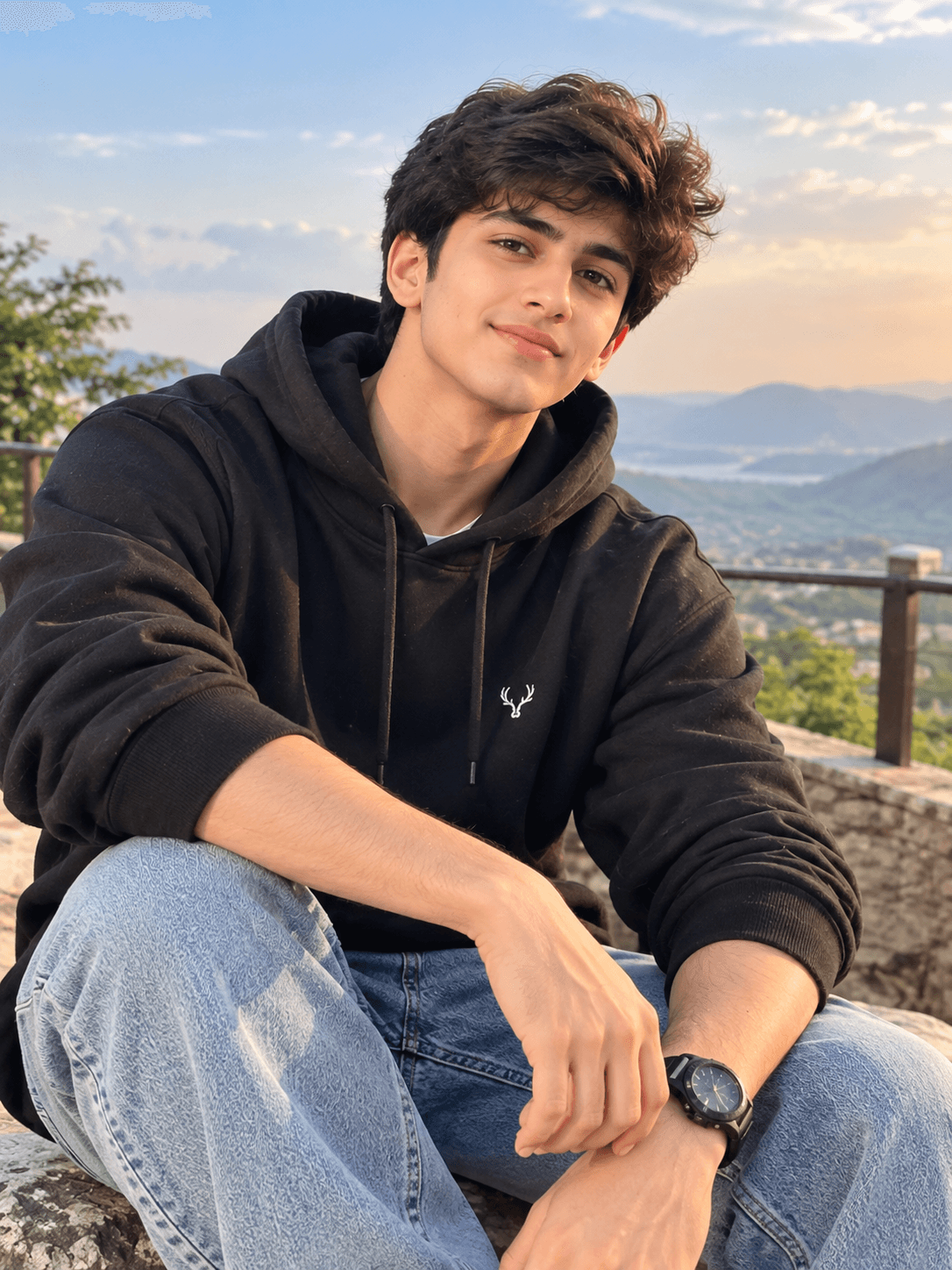
Use the uploaded user photo as the ONLY source of the main subject’s identity and facial appearance. Preserve the user’s exact recognizable identity with maximum fidelity: face shape, facial proportions, forehead, hairline, eyebrows, natural eye shape and spacing, nose, lips, mouth structure, cheeks, cheekbones, jawline, chin, skin tone, natural skin texture, facial hair if present, and every distinctive facial characteristic. USER PHOTO = WHO THE PERSON IS. Do not copy, replace, blend, beautify, redesign, or reinterpret the reference person’s identity. Do not alter the user’s gender or recognizable features. The reference image controls everything except identity. Recreate the reference as a highly realistic cinematic vintage Indian street-fashion photograph set in old Bombay/Mumbai near the Gateway of India, with a warm nostalgic 1960s–1970s Bollywood-era atmosphere. Show the user as the main full-body subject leaning casually against the front/side of a classic black-and-yellow vintage Bombay taxi in the foreground. The subject stands slightly right of center, occupying the central-lower portion of the frame, with the taxi extending across the entire lower-left foreground. The body is relaxed and confident: upper back and left side leaning against the taxi, left arm bent with the left hand resting naturally on the car, right arm relaxed downward beside the torso, shoulders loose, torso slightly angled, hips subtly shifted, and legs crossed casually at the ankles with one leg extending diagonally forward. Reproduce the exact relaxed, stylish posture and body orientation of the reference. Match the reference head position precisely: head turned slightly toward the viewer’s left while the body remains angled, chin naturally raised, neck relaxed. Reconstruct the reference subject’s facial expression, emotion, eye openness, eyebrow position, mouth shape, and gaze direction, but apply them to the user’s identity. The expression should be calm, confident, subtly amused and reflective, with a gentle understated smile rather than a broad grin. The eyes should gaze slightly toward the left/off-camera direction exactly as the reference, not toward the user’s original photo direction. The user’s source-photo expression must have absolutely no influence on the final expression. Dress the user in the same overall vintage styling: a long-sleeve retro patterned button-up shirt with dense brown, beige, cream and muted rust geometric/ornamental motifs, casually worn with the upper buttons relaxed/open; high-waisted wide-leg brown trousers with a subtle textured pattern; dark brown leather belt with a simple metallic buckle; classic dark brown leather ankle boots. Add a vintage metal wristwatch on the wrist corresponding to the reference. Preserve realistic fabric folds, natural draping, and authentic 1970s-inspired tailoring. Do not change the user’s identity while adapting hair styling only as necessary to complement the reference composition. The foreground vehicle must be a photorealistic classic black-and-yellow Bombay taxi, with glossy black bodywork, yellow roof, chrome trim, rounded vintage body, large black tires, chrome hubcaps, windshield wipers, roof luggage rack, and an old yellow license plate. Position the vehicle diagonally from the lower-left corner toward the center, with the subject leaning against its front-side hood/fender area. Include realistic reflections across the polished black paint and subtle signs of age and use. Recreate the background architecture and environment precisely: an old weathered Bombay streetscape with historic colonial-era buildings on the left, aged cream/tan façades, balconies, windows, peeling textures and dense urban details. On the left building, include a large vintage Bollywood-style painted movie billboard featuring a romantic male-and-female film portrait and bold red Hindi/English-style lettering, plus the prominent old bookstore signage reading “NAVRANG BOOK HOUSE” and smaller stacked signage suggesting books, magazines, stationery, films and posters. Include another elevated vintage sign reading “BETTER BOMBAY BRIGHTER INDIA” in the middle background. Keep the signs integrated naturally into the aged architecture rather than appearing digitally modern. Place the Gateway of India clearly in the middle-right background, recognizable but slightly softened by atmospheric perspective and depth of field. Show its monumental stone arch and domed architectural details behind the subject. Include pedestrians walking along the waterfront street/road, with several figures in period-appropriate everyday clothing, naturally distributed around the Gateway area. Add additional classic black-and-yellow taxis in the distant right background. Include an ornate double-headed vintage streetlamp on the right side, tall and elegant, with curved decorative arms and hanging lamps. Use a vertical 4:5 composition, matching the reference framing. Full-body subject visible from head to boots, with enough surrounding environment to establish the location. Camera positioned approximately at chest-to-eye level with a slightly low, cinematic perspective that gives the subject presence while keeping the Gateway visible behind him/her. Use a moderate wide/normal focal length around 50mm equivalent, natural perspective with mild environmental depth, avoiding exaggerated wide-angle distortion. Keep the subject sharply detailed while the distant architecture, pedestrians and Gateway gradually soften through realistic depth of field. Lighting should match the warm late-afternoon golden-hour illumination of the reference: soft directional sunlight from the upper-left/front, warm highlights across the subject, taxi, historic buildings and cobblestone/paved ground, gentle natural shadows, subtle rim light around the subject’s hair and shoulders, and atmospheric haze toward the distant waterfront. Use rich warm browns, faded creams, muted orange, golden yellow, charcoal black and dusty blue sky. Preserve realistic skin tones and natural texture without excessive smoothing. Apply an authentic vintage 35mm Kodak film aesthetic: subtle film grain, organic photographic texture, slight halation, soft highlight rolloff, mild faded contrast, gentle warm color grading, tiny imperfections, realistic dust/scratches and lightly distressed film edges. Add a thin dark vintage film border around the image and subtle analog frame markings consistent with the reference, while keeping the main photograph clean and legible. The result should feel like a genuine discovered vintage Bombay photograph rather than a modern digital recreation. Maintain physically accurate anatomy, natural hands and fingers, realistic clothing folds, convincing vehicle reflections, detailed architectural textures, authentic atmospheric perspective, and photographic depth. No plastic skin, no excessive HDR, no modern cars, no contemporary clothing, no futuristic elements, no artificial-looking faces, no identity drift, no duplicated people, no malformed hands, no distorted limbs, no extra fingers, no text overlays beyond naturally occurring environmental signage. Final priority: user photo determines identity; reference determines expression, gaze, head pose, body pose, clothing, composition, environment, camera perspective, lighting and visual style.
How to use this prompt
In Gemini
- Tap Copy prompt, or Open in Gemini, which copies it for you.
- In Gemini, add your photo with the + button.
- Paste the prompt into the message box and send.
In ChatGPT
- Tap Open in ChatGPT: it opens with the prompt filled in (it is copied too, in case you need to paste it).
- Attach your photo with the + button.
- Send, and wait for your picture.
Gemini se kaise banaye: photo upload karo, prompt paste karo, send dabao.
Questions people ask
Is this prompt free?
Yes. Copy it and use it in Gemini, ChatGPT or another AI photo app as often as you like. You don't need a pixkoz account to copy it.
Will it work on my photo?
It works best with a clear, front-facing photo in good light, with the face fully visible. AI results vary from one try to the next: if a detail is off, try again.
Gemini or ChatGPT: which is better for this?
Both can use it. The examples on this page were made with Google: Nano Banana (Gemini 2.5 Flash Image), the model behind Gemini's images, so Gemini comes closest to them; ChatGPT gives its own take on the same prompt.
What happens to my photo?
When you use the prompt in Gemini or ChatGPT, your photo goes to that app, not to pixkoz, and that app's own privacy terms apply.